
Bold colors and natural materials for this industrial-style home in a renovated urban building
In Massachusetts, interior designer Sashya Thind has designed a home in the new CALA residential complex that stands out for its industrial architectural elements and, above all, for its strong sense of community.
By Marilena Pitino | Photography by: Jared Kuzia | Original Article
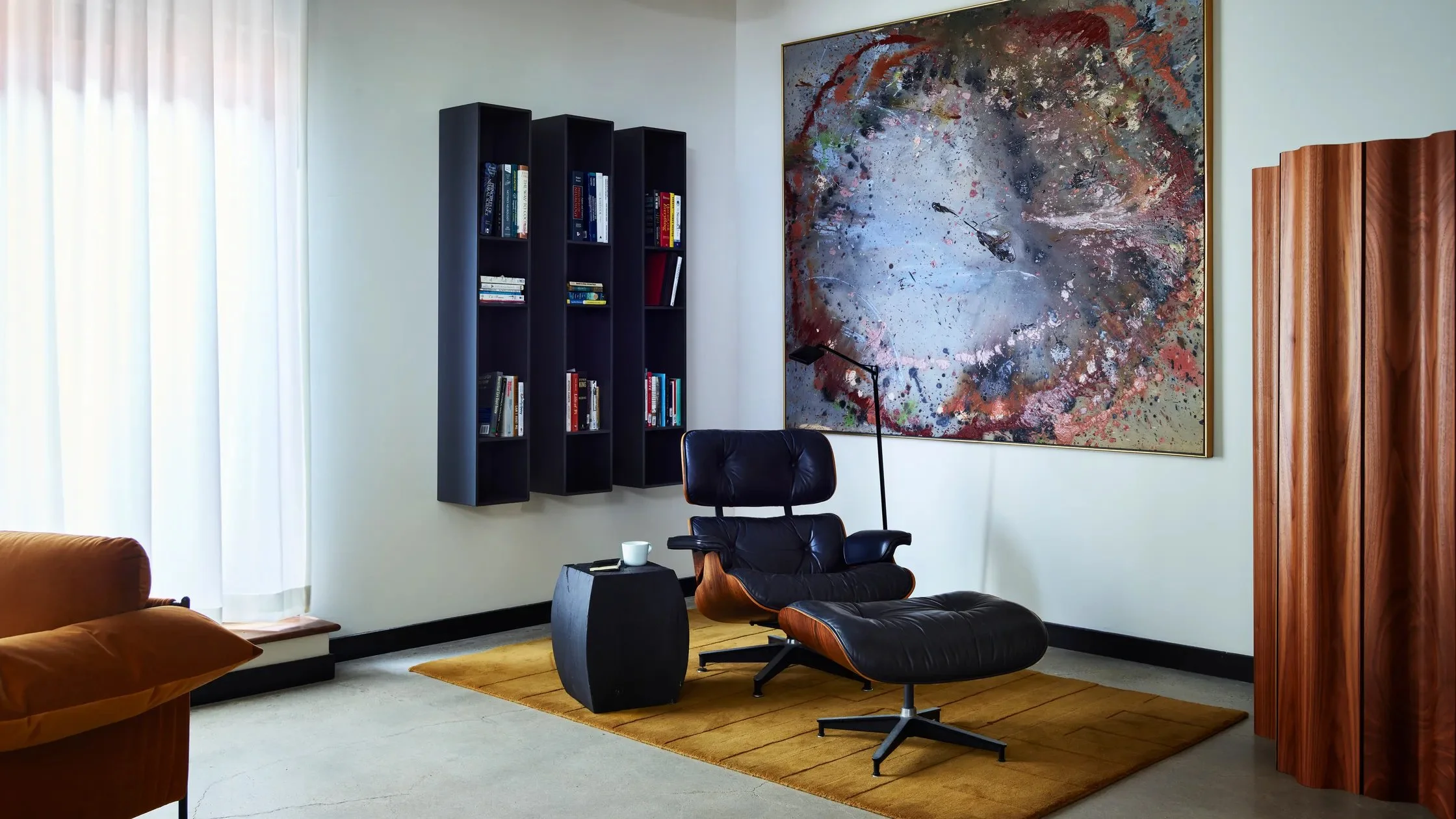
The reading corner with Eams lounge chair for Vitra, Water Mill artwork by Mark Rausch and Nordic Knots rug.
Bold colors and natural materials for this modern industrial-style home in a renovated urban building
In the vibrant city of Somerville, Massachusetts, on the East Coast of the United States, known for its young population, great restaurants and cultural buzz, interior designer Sashya Thind has designed a residence, located within CALA, a building that once housed a school and that was recently redeveloped as a residential complex.
As stated on the website, «CALA envisions the former Powder House Community School building as a celebration of community, architecture, landscape and art. This vibrant urban community hub features 48 residences, 230,000 square feet of vibrant retail space, and over an acre of public and landscaped spaces. CALA’s urban museum also includes a growing collection of murals.

The living room with furnishings with a Scandinavian mood. Sofa by Eilersen Lekker; Alva armchair for Sarah Ellison; vintage coffee table by Adam Pearsall; Nordic Knots rug; multimedia cabinet by Treku.
A space that celebrates urban life
The school has been transformed into compact living units, featuring concrete floors, walls, and ceilings that create an industrial feel. The shared outdoor spaces are complemented by murals by local artists and urban gardens, which help enhance a sense of community.
A young doctor recently purchased a beautiful modern industrial-style home here, featuring 1,500 square feet of interior space and a generous 300 square feet of outdoor space. “He was attracted to the architecture, the location, and the strong community feel. He asked us to create a warm and welcoming environment, using rich tones and textures inspired by Indian culture. I immediately fell in love with the architecture of the space, embellished with concrete floors, columns and ceilings. Sebastian Mariscal’s team, the architect of CALA, managed to preserve the essence of the original building, renovating and reimagining it as a modern residence,” says the interior designer.
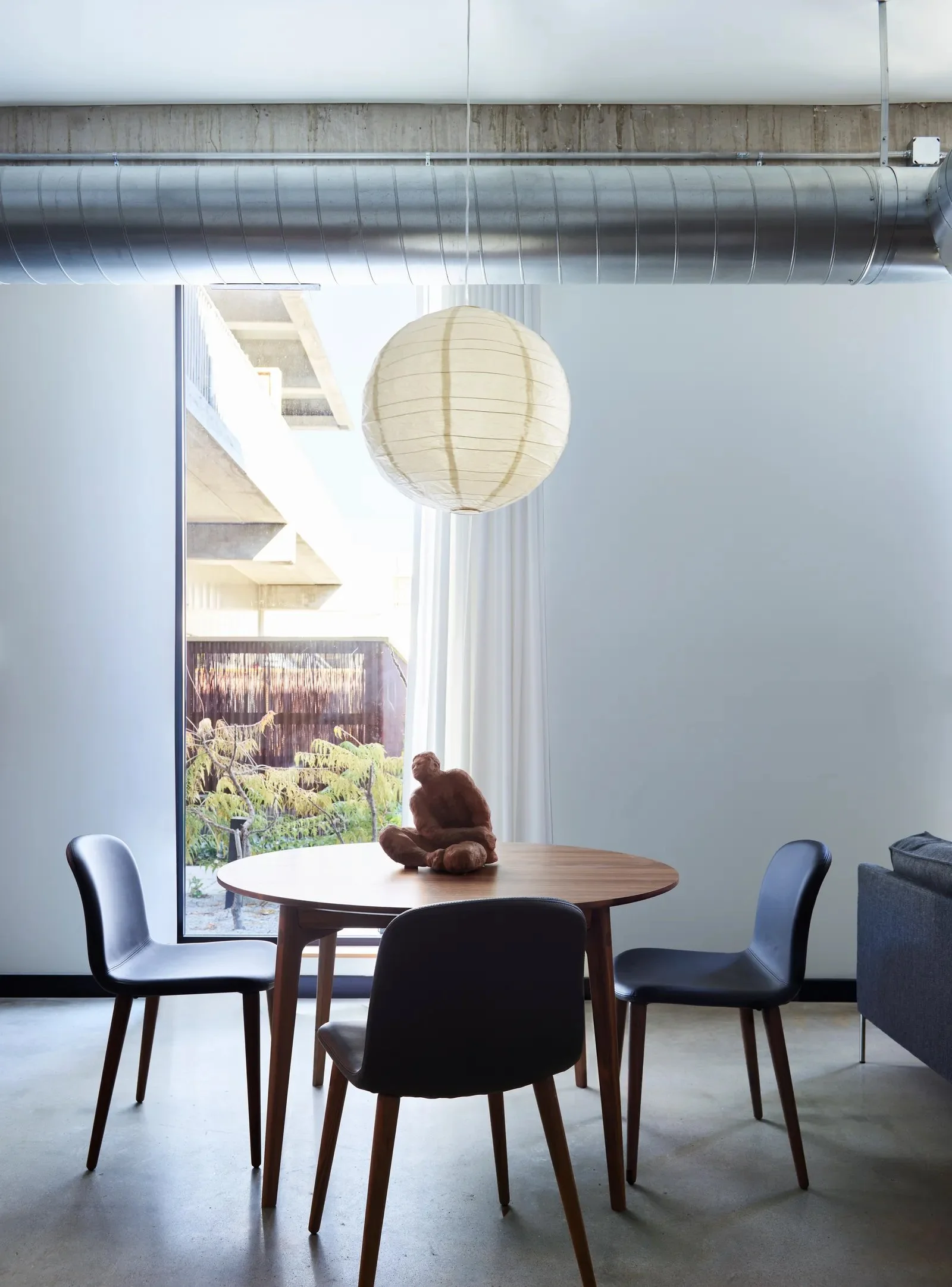
The dining area with extendable table, wooden sculpture and Bacco seats
A project whose context has profoundly influenced the design choices. “I believe that, after so many years of experience, the eye begins to read the elements spontaneously, almost unconsciously. Sometimes, looking at the images, I only realize in hindsight why a particular color, texture or material attracted me. It’s an instinctive feeling, that moment when you understand that something is simply ‘perfect’ for a space. Lately I have been relying more and more on these sensations and I continue to redesign until I am fully satisfied. The murals and gardens that surround the unit are difficult to describe: they must be experienced in person. Even as a visitor, as I often am, there is a sense of comfort and belonging that is almost palpable and that really struck me,” Thind says.
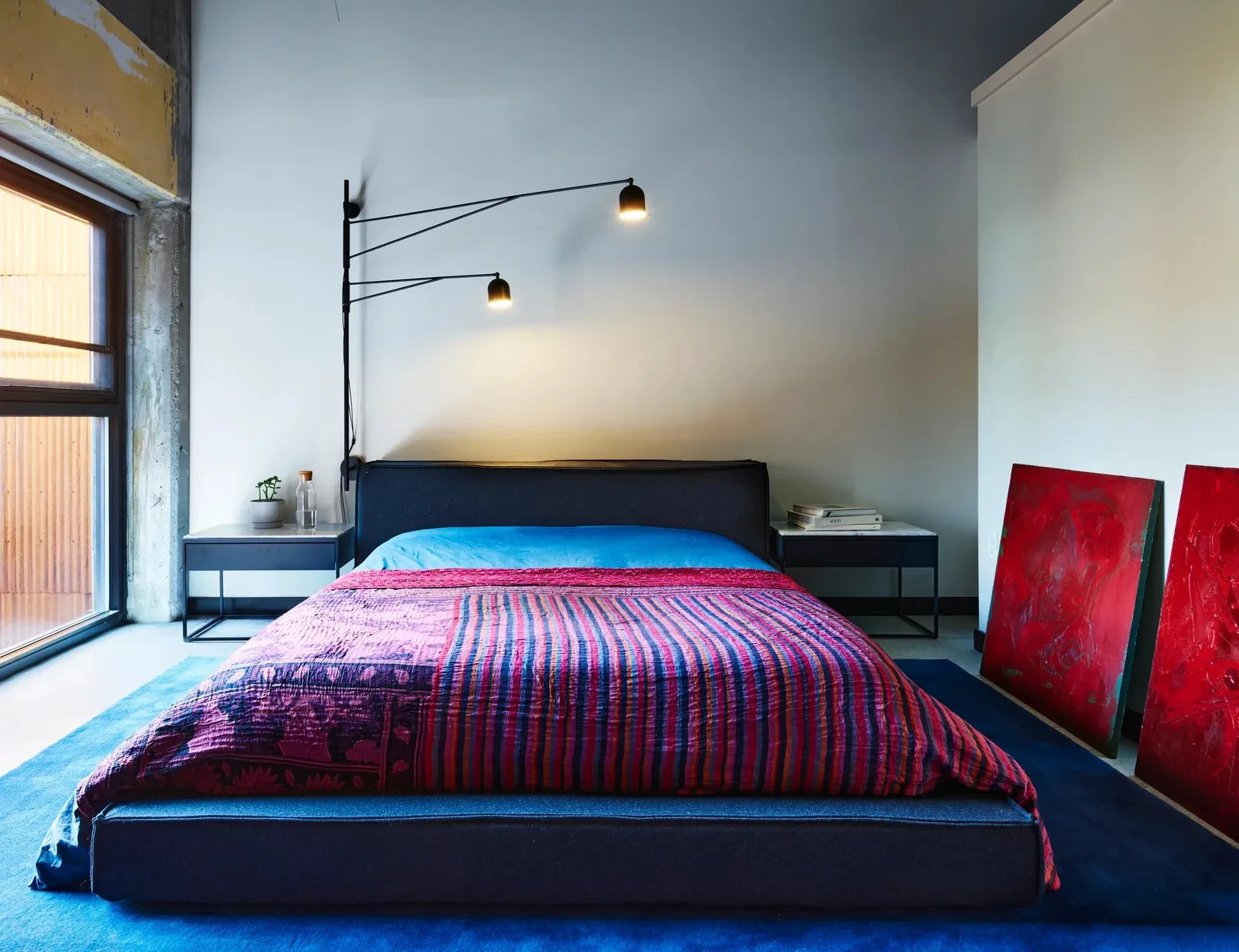
The brightly colored bedroom: Blue polka dot bed, handmade Kantha blankets from India, Nordic Knots rug, artwork curated by Sashya Thind through a vintage dealer; wall sconce by Awkward Light, blue dot nightstand; bedding by Parachute.
Bold hues and Indian influences
Thus, Sashya Thind draws inspiration from the architecture, the surrounding environment and the needs expressed by the client. “In this case, the Water Mill canvas by Mark Rausch was a source of inspiration, helping me create a clear concept right from the start. I imagined the Pearsall tables and rich hues that could offset the concrete walls,” Thind explains. The result is a balance between modern elements and warm accents, which give the space a welcoming and sophisticated character. The deep hues intertwine with the raw gray of the concrete, creating a dialogue between industrial materials and refined details. The use of the Pearsall tables, icons of mid-century design, adds a retro touch that contrasts nicely with the contemporary look of the space.
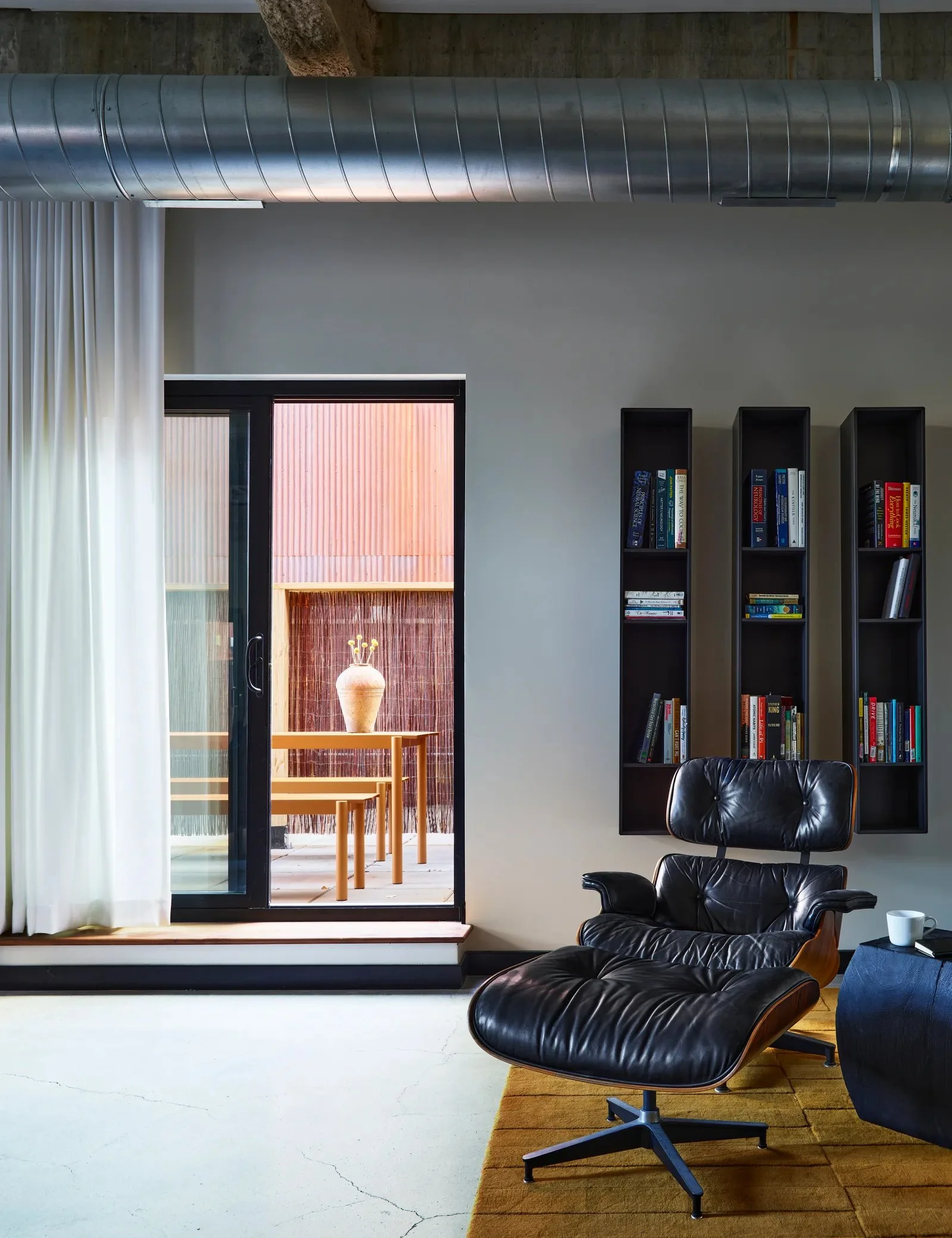
Detail of the reading corner with lounge chair by Eames for Vitra and Nordic Knots rug.
The space is laid out on two levels: the upper level features three bedrooms and two bathrooms, while the first floor features a living area designed with a mix of natural woods, wool rugs, and brightly colored fabrics. “I introduced Kantha blankets in the bedrooms to add a layer of India’s rich history, a nostalgic touch, and a handcrafted element that evokes the idea of home,” Thind says.
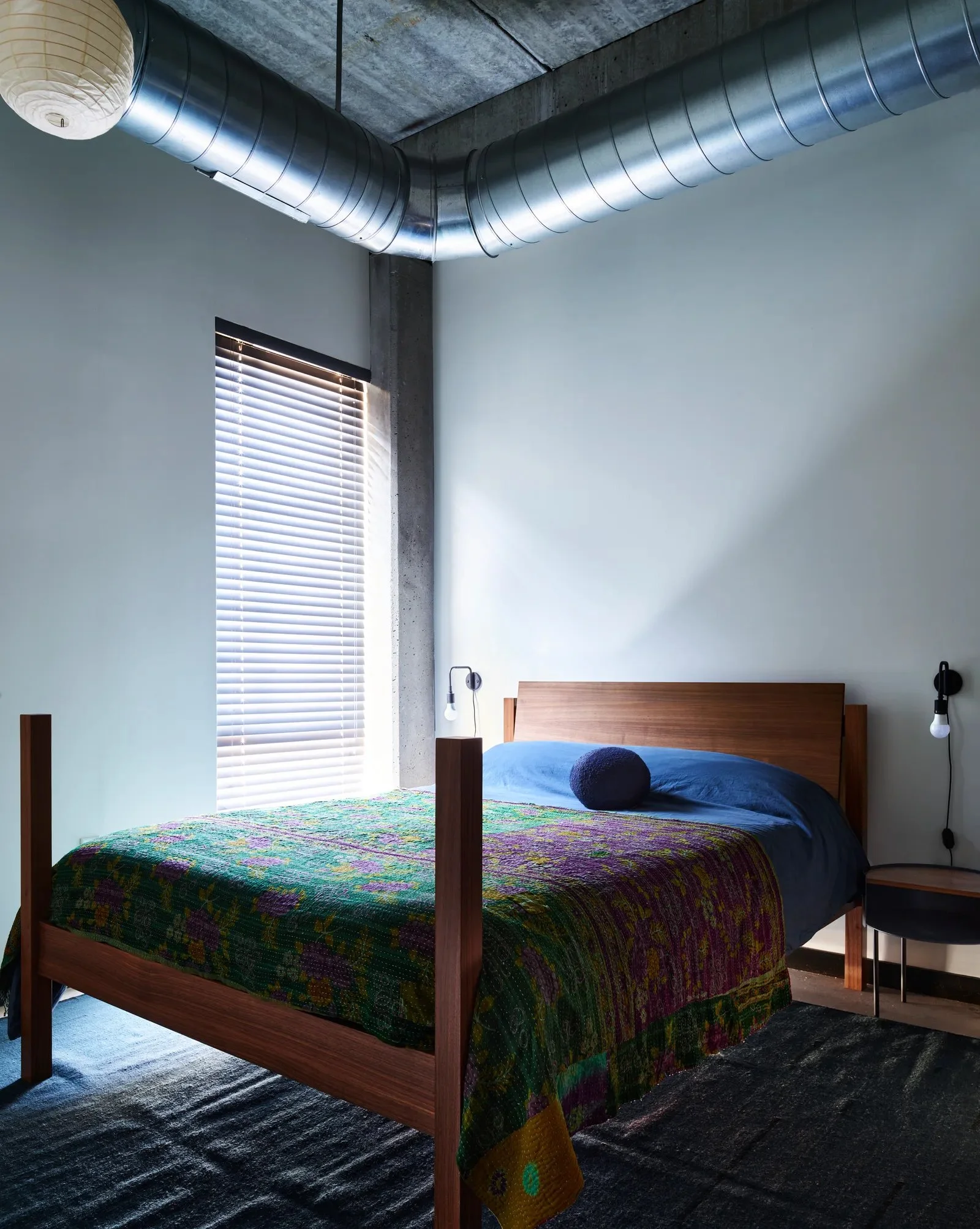
The guest bedroom with Blu dot nightstands, handmade Kantha blankets from India, Nordic Knots rug and Parachute bedding.
Even the window coverings were carefully chosen to provide soft light and privacy, while also allowing for a visual dialogue with the garden. At garden level, passersby walk past the units to access shared spaces.
The designer sought to convey an aesthetic that speaks of “warm minimalism,” a concept she describes as the ability to create spaces that are welcoming and capable of instilling a sense of calm. “The details that seem the simplest are, in fact, the ones that reveal the best design,” explains Sashya Thind. “The idea is to invite us to take a break from our daily lives to create a relaxing sensory experience.”